






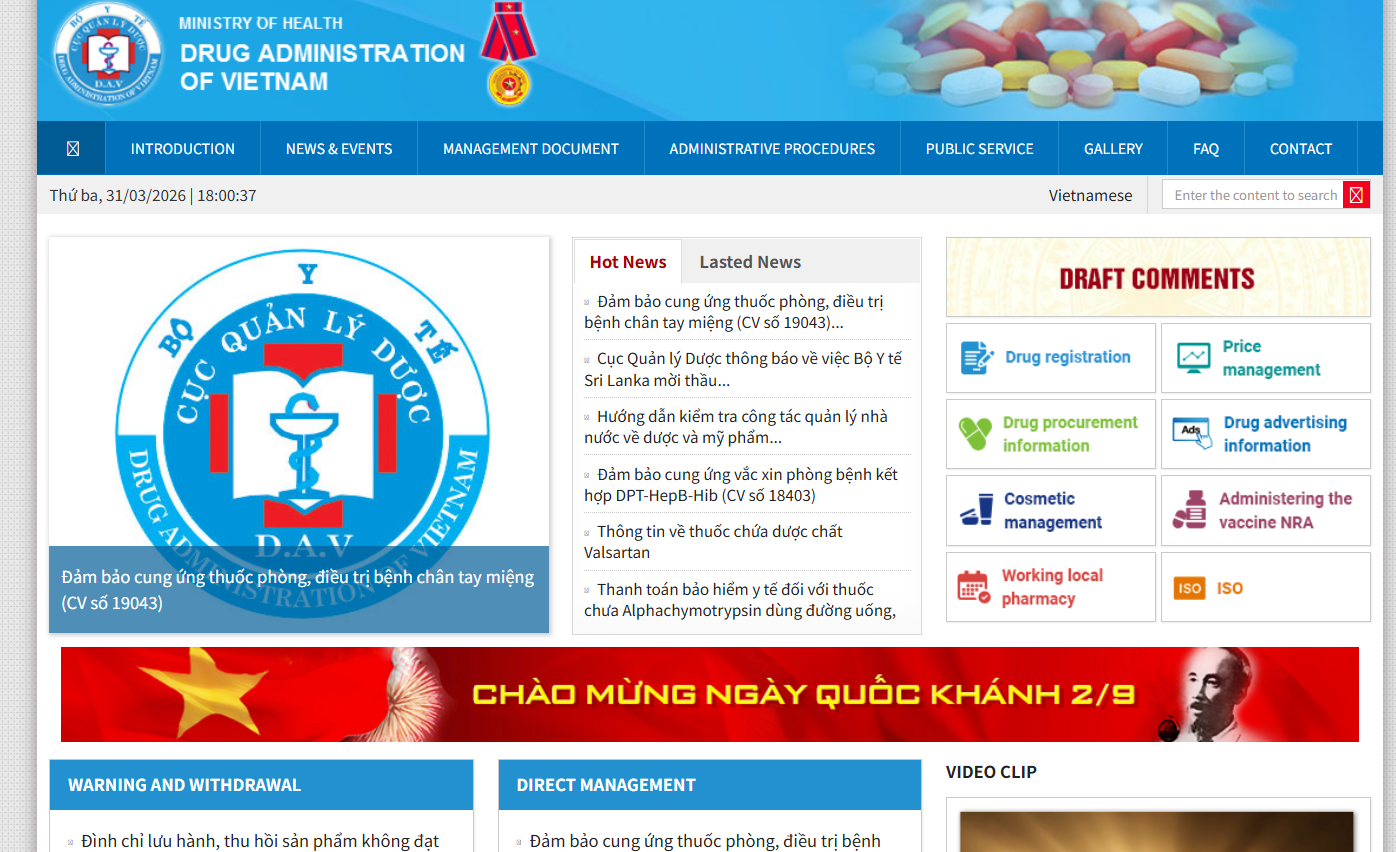
On March 3, 2026, the Ministry of Health of Vietnam issued an announcement on its official website: the circulation of 291 cosmetic products containing Cyclotetrasiloxane and Octamethylcyclotetrasiloxane is suspended, and these products are being recalled. This decision took effect immediately nationwide, drawing significant attention from the industry.
This is not only a large-scale product recall but also a clear signal—ASEAN’s regulation of cyclic siloxanes is tightening across the board.
I. What Happened?
According to the announcement:
- Revocation of 291 cosmetic product notification numbers.
- Suspension of circulation nationwide.
- Mandatory recall and destruction of all relevant product batches that are still within their shelf life.
- Reporting Requirement: Companies must submit recall and destruction reports to the drug regulatory authorities by March 26, 2026.
- Local Oversight: Health departments at all levels are responsible for supervising implementation and handling violations in accordance with the law.
- Execution Agency: This action is specifically carried out by the Drug Administration of Vietnam (DAV).
II. Why the Recall? — Directly Linked to ASEAN Meeting Resolutions
The announcement explicitly stated that this recall is intended to implement
- The conclusions of the 42nd ASEAN Cosmetic Committee (ACC) Meeting (November 2025).
- The minutes of relevant meetings of the Scientific Committee on Cosmetics of the Ministry of Health of Vietnam.
- Provisions on product suspension and recall mechanisms under the ASEAN Cosmetic Directive (ACD).
In other words, this action was not a unilateral decision by any single Member State, but an enforcement measure under the unified ASEAN regulatory framework.
III. What is the Named Substance?
The ingredient involved in this action is:
- Cyclotetrasiloxane (D4)
- Octamethylcyclotetrasiloxane
These belong to the category of volatile cyclic siloxanes, commonly found in:
- Hair care products
- Skin care serums
- Color cosmetics
- Antiperspirants and deodorants
In recent years, such substances have come under scrutiny in multiple markets due to the following reasons:
- Environmental Persistence: They do not break down easily in the environment.
- Potential Bioaccumulation: They may build up in living organisms.
- Controversy over Long-term Exposure Risks.
The discussion at the ASEAN level indicates that this issue has entered the stage of regional coordinated regulation.
IV. Impact on Export Enterprises
For companies currently exporting to or planning to enter the Vietnamese and ASEAN markets, the following actions are recommended to be taken immediately::
- ✅ Formula Screening: Focus specifically on cyclic siloxane substances.
- ✅ Structure Check: Verify if products involve D4 structures.
- ✅ Feasibility Assessment: Evaluate alternative ingredients.
- ✅ Regulatory Monitoring: Stay updated on subsequent ASEAN meeting developments.
If your products are already circulating in the Vietnamese market, you should immediately confirm whether they are on the list of 291 products and prepare a contingency plan accordingly.